LESS CONFUSION. MORE CONFIDENCE.
Website questions, answered without the headaches.
Plain-English guidance for Australian small-business owners navigating website choices, ownership, ongoing costs and good practice.
THE DDZM AI FAMILY IS HERE TO HELP



Friendly AI faces. Real questions. Useful answers.
YOUR STARTING POINT
Find your way through website stuff.
Three big topics, explained without making you learn an entire new language.
THE FAMILY HAS ENTERED THE CHAT
Meet your friendly AI explainers.
These illustrated characters represent DDZM's AI assistants—not human employees. Their job here is to help make technical topics easier to understand.
Watson
AI General Manager
What am I actually paying for?
Website construction, hosting, maintenance and support are different things. Check what your quote includes before you commit.
Website Build
AI Technical & SEO Specialist
Does a website need attention after launch?
Usually, yes. Updates, backups, security checks and working contact forms all matter.
Marketing & Social
AI Marketing Assistant
Should I build my own website?
You can! The right choice depends on your budget, available time, confidence and the result you need.

Doc Master
AI Documentation Specialist
Who actually owns my website?
Ownership can differ across content, design, software and accounts. Ask for a written explanation of what's yours and what's licensed.
For complete explanations and important qualifications, see the FAQs below.
NO JARGON. NO GUESSES.
12 questions worth asking.
Tap a question for the straightforward explanation. Start anywhere; you don't need to read them in order.
What's the difference between a domain name, hosting and a website?
A domain name is the address people use to find your website, such as yourbusiness.com.au.
Hosting is the service that makes your website available online.
Your website is the collection of pages, content, images and features that visitors use.
These are different components, although some website platforms bundle them together.
Do I own my website once I've paid for it?
It depends on your agreement and the different parts of the website.
You might own original content you've created, receive ownership or usage rights to certain work produced by a designer, and use other elements—such as software, fonts, templates and stock photographs—under separate licences.
For Australian .au domains, the person or organisation recorded as the registrant holds the domain-name licence, subject to the applicable registration rules. A domain-name licence is not the same as outright ownership of the name.
For DDZM Quick Launch projects, you retain ownership of the content and materials you supply. Once DDZM has received full payment, you are entitled to ownership of project-specific deliverables created and owned by DDZM specifically for your project, to the extent those rights can legally be transferred. Where required, DDZM will provide written confirmation or an assignment as part of final handover. DDZM retains its pre-existing intellectual property, and third-party components remain subject to their applicable licences. Your accepted quote and DDZM Customer Service Terms govern the project-specific arrangements.
Paying for a website does not automatically mean every underlying software component, design asset or third-party licence transfers to you.
Before committing, ask for a written explanation of what you will own, what you may use and which accounts you will control.
Can I move my website to another web designer?
Often, yes, but the process depends on the platform, your agreement, account access and the website's features.
Some systems allow website files and databases to be transferred to another hosting provider. Other platforms may restrict exports or require parts of the website to be rebuilt.
Even when content can be transferred, certain themes, plugins, subscriptions, integrations or platform-dependent features may not work the same way elsewhere.
Third-party licences may also restrict continued use or require replacement licences.
Before choosing a provider, ask what can be transferred, what may need rebuilding and which accounts and licences you will control.
Should I build my own website or hire a professional?
Both approaches can make sense.
A do-it-yourself website builder may suit a business with simple requirements, a limited budget and time to learn the platform.
Professional assistance may be useful if you need help with design, content structure, particular features or managing the build.
Consider your budget, available time, confidence with technology and what your business needs the website to achieve.
Why do website prices vary so much?
Websites can differ significantly in design, functionality and the work involved.
A basic informational website is different from an online store, booking system or custom business application.
When comparing quotes, look beyond the number of pages. Ask about content, design, testing, revisions, integrations and what happens after launch.
Also check whether ongoing services are included or quoted separately.
What ongoing costs should I expect?
It's helpful to separate four categories:
Website construction: The initial work involved in designing and building the website.
Hosting or platform fees: The service that keeps the website available online, which may involve recurring payments.
Maintenance: Ongoing activities such as software updates, backups, security checks and functionality testing.
Support and future changes: Help with problems, content updates, new features or other work after launch.
Other possible expenses include domain renewals, premium software and third-party subscriptions.
These categories are not automatically included in one another.
When considering a DDZM quote, check the written proposal to see exactly which construction, hosting, maintenance and support services are included, excluded or subject to separate arrangements.
Do not assume that paying for a website build includes unlimited hosting, maintenance or support.
Does a website need maintenance after launch?
Most websites require some ongoing attention.
Depending on the platform, this may include software updates, backups, security checks, testing contact forms and keeping business information accurate.
For systems such as self-hosted WordPress, updates to the core software, themes or plugins can sometimes affect how the website functions.
After significant updates, it's sensible to check that important pages, forms and other key features still work as expected.
Some hosted platforms handle more technical maintenance automatically, but that doesn't remove every responsibility.
Who is responsible for backups and security?
That depends on your platform, hosting arrangements and any maintenance agreement.
A hosting provider may perform some backups or security tasks, but that doesn't necessarily cover every risk.
Ask who is responsible for:
- Keeping software up to date
- Managing administrator access and multi-factor authentication
- Creating and storing backups
- Testing whether backups can actually be restored
- Responding to security incidents or website failures
A backup is much more useful when someone has verified that it can be restored.
It's also important to know who controls the relevant accounts and how access is removed when a staff member or provider no longer needs it.
What happens if my website stops working?
The appropriate response depends on the cause.
Possible problems include hosting outages, domain expiry, incorrect or disrupted DNS settings, software conflicts, compromised accounts or malfunctioning third-party services.
DNS is the system that helps direct visitors to the correct website server. Problems with DNS can prevent people from reaching a website even when the website itself is still running.
It's worth knowing your support arrangements in advance: who to contact, what assistance is included and whether urgent support is available.
Does every Australian business website need a privacy policy?
Not every Australian small business has identical privacy obligations.
The Australian Privacy Act covers many organisations and some smaller businesses, depending on their circumstances and activities. Organisations covered by the Australian Privacy Principles generally need an appropriate privacy policy.
If your website collects personal information or uses analytics, advertising or other tracking services, consider what privacy obligations apply.
The rules depend on the business, the information involved and how it is handled.
Seek qualified advice where necessary.
Can I use images I find on Google?
Not automatically.
An image appearing in search results does not mean you have permission to use it on your business website.
Safer options include photographs you've created, images you've commissioned with appropriate rights or properly licensed stock images.
Always check the applicable permission, licence and attribution conditions. Giving credit to the creator does not necessarily replace the need for permission.
Does my website need to be accessible to people with disabilities?
Accessibility helps people with different abilities use websites.
Australian disability discrimination law can apply to online goods and services. The Web Content Accessibility Guidelines (WCAG) are widely used to guide accessible website design.
The Australian Human Rights Commission recommends WCAG 2.2 Level AA as a minimum accessibility target.
However, it would be misleading to claim that every Australian small-business website has an identical statutory WCAG requirement. The appropriate legal and technical assessment depends on the circumstances.
These answers provide general educational information, not legal advice or an assessment of any particular business.
FEATURED GUIDE · READ NOW
Do you really own your website?
A practical look at domain registration, website content, design assets, licences and the accounts you should control.
Read the full guide to understand how domain names, hosting, content, design assets and third-party licences can affect what you own.
Read the ownership guideSTILL HAVE A QUESTION?
Your website questions are welcome.
Tell us what you're trying to understand or achieve. We'll help you identify the next step.
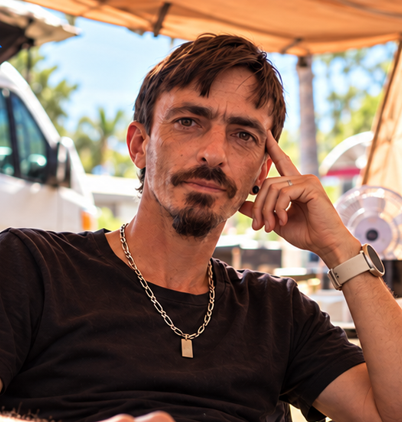
Talk directly with Denis. DDZM's founder handles customer conversations; our AI assistants help behind the scenes.